

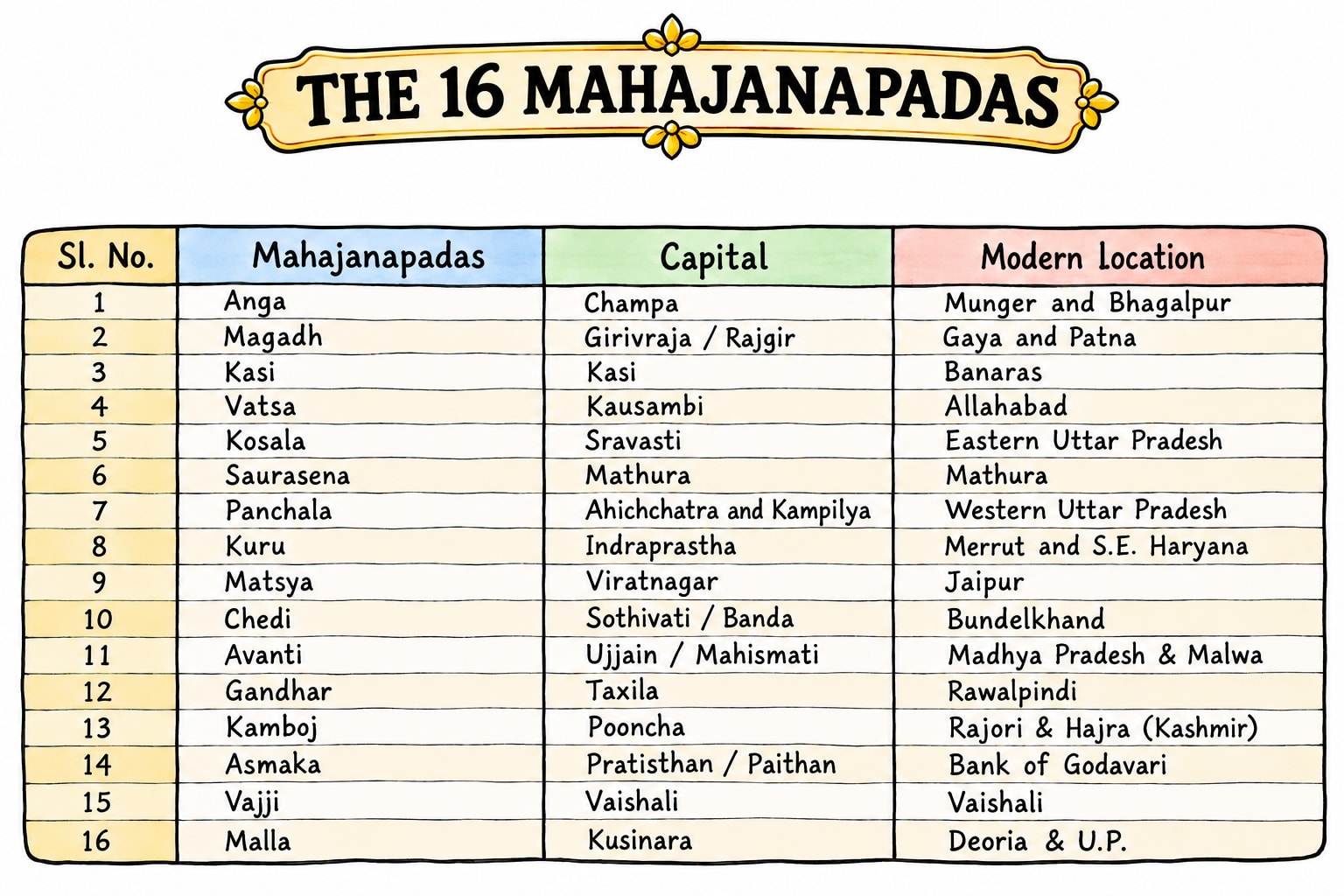
The Rise of Mahajanapadas#
The rise of Mahajanapadas marked a significant and transformative phase in ancient Indian history, particularly around 600 BC. This period witnessed a significant transformation from tribal society to large and organised states or kingdoms known as Mahajanapadas.
The foundation of the rise of Mahajanapadas can be attributed to significant economic development. The period witnessed advanced agricultural practices, including the use of iron tools.
The period also witnessed the beginning of the use of metallic currency. The earliest Buddhist literature, such as the Vinaya Pitaka and Jataka, contains early definitive and explicit literary references to currency, such as Kahapana, Nishka, and Karsapana. The literary data is strongly supported by archaeology: physical discoveries of numerous silver and copper punch-marked coins have been made at several historical sites in India.
The period also witnessed notable social changes that facilitated urbanisation and the rise of Mahajanapadas. The relatively egalitarian society of the Vedic period was gradually transformed into a stratified society based on the varna system. This stratification helped in the organisation of labour and the specialisation of professions, which were critical for administrative and military purposes.
The rise of heterodox sects that preached social harmony also played an important role by advocating equality and challenging the authority of the Vedic tradition. They helped reduce social conflict and integrate diverse social groups more effectively into state structures. Social cohesion was crucial for the stability and administrative efficiency of the emerging Mahajanapadas.